When government delegations met in Belém last year, the conversation extended beyond emissions targets and climate finance.
For the first time, countries formally acknowledged the growing threat of climate disinformation and misinformation in shaping climate action.
The Declaration on Information Integrity on Climate Change, signed by more than 15 countries, marked a turning point. It recognised that false and misleading narratives are not just a side issue but a central obstacle to global climate efforts.
The move followed the inclusion of information integrity on the agenda of the United Nations Climate Change Conference.
Five months later, the implications of that pledge were playing out thousands of kilometres away in Harare, Zimbabwe.
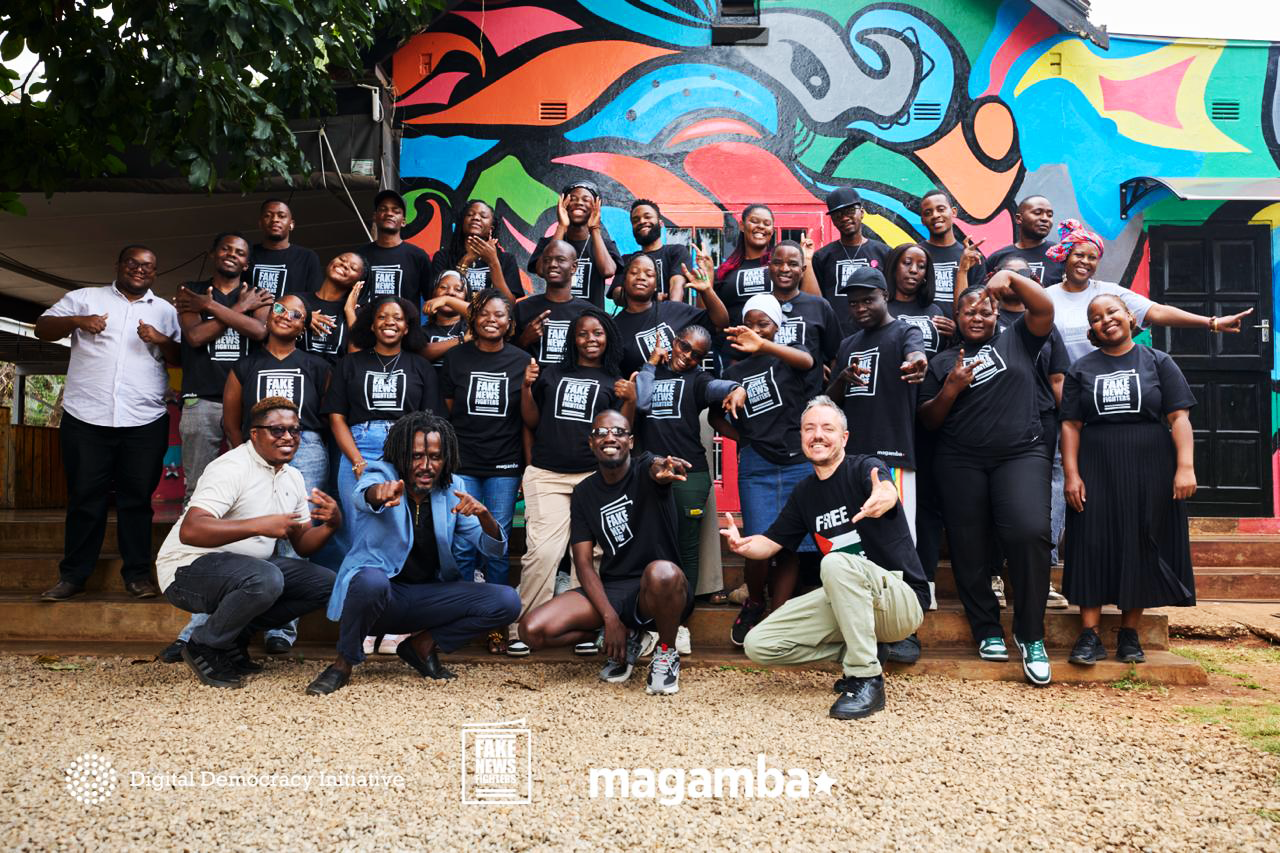
A group of 30 young people around Zimbabweans gathered for what organisers described as the country’s first climate disinformation bootcamp.
The programme was hosted by Moto Republik in collaboration with Magamba Network and the Digital Democracy Initiative.
The training drew on UKWELI, the Africa Climate Disinformation Toolkit, a resource designed to help users trace, verify and debunk misleading claims circulating online and offline.
Magamba Network creative director Samm Farai Monro warned that Africa is confronting what he describes as a “dual crisis” of worsening climate impacts and a surge in climate disinformation.
He cited rising temperatures, intensifying droughts and increasingly severe floods as evidence of a deepening environmental emergency across the continent.
A coordinated global network has been identified as spreading “climate lies”, driven by influential actors including fossil fuel companies, major technology firms, and right-wing political groups, which he says are shaping public debate and undermining climate action.
“We’re in the midst of environmental breakdown. You can see it through the rising temperatures that we have, through the increasing droughts, the increasing floods,” he said.
“But at the same time, alongside this climate crisis, there’s another crisis, and that’s a crisis of climate lies and climate disinformation. And these climate lies are being pushed by very powerful interests, like those you just saw on TV. Big oil, big tech, right-wing political actors.”
Monro alleged that these forces are working to slow Africa’s climate response in order to protect profits from continued resource extraction, despite the continent being highly vulnerable to climate impacts.
“They’re wanting to stop Africa from taking climate action. They’re wanting to protect their profits, and they want to keep on extracting as much wealth as possible from our continent while they literally set it on fire. And what they don’t want us to do is that Africa’s got all the potential to be a renewable energy powerhouse.”
He argued Africa holds significant untapped potential in the green transition, citing its vast solar resources and large share of critical minerals needed for renewable technologies, as well as the possibility of creating sustainable jobs for young people.
“Africa currently is using just 1% of all its solar capacity. Africa’s got 30% of all the critical minerals that are needed globally for a just transition. Africa’s got the potential to give decent green jobs to its young people and to move forward with a just energy, no carbon future.”
Mactilda Mbenywe, lead researcher for Africa’s Climate Disinformation Toolkit (UKWELI), says Africa’s climate crisis is being compounded by a parallel surge in climate disinformation, which is distorting public understanding and slowing climate action across the continent.
These misleading narratives are increasingly undermining trust in environmental initiatives, even when such projects could directly benefit communities.
“The climate ecosystem is changing, apart from the devastating impacts that we are facing as a continent, we are also facing climate disinformation, making the crisis even worse than we could have, if at all we wouldn’t just be having factual information that encourages climate action across the continent.”
“People in the north are coming up with solutions for us, for our continent, which cannot really address our problem,” she said.
Mbenywe also raises concerns about externally driven solutions, saying approaches developed outside the continent often fail to reflect Africa’s specific realities and challenges.
She warns that the spread of climate myths is effectively aiding those who deliberately delay action, leaving African countries more vulnerable to escalating climate impacts as misinformation continues to shape public perception and policy responses.
“Widespread climate myths are causing many people to distrust or resist climate action, even when some projects could benefit their communities. This misinformation fuels hesitation and rejection, ultimately aiding those who deliberately spread false narratives to delay action,leaving the continent more exposed to worsening climate impacts.”
“We are giving another hand to these people, who are spreading this information to delay climate action. As the continent still falls into increasing impacts of climate change,” she added.
Global analysts tracking disinformation trends say such dynamics are not accidental. Philip Newell, co-chair for communications at the Climate Action Against Disinformation Coalition, describes a system in which well-funded interests manufacture narratives that appear grassroots but are strategically engineered.
“Disinformation is used to justify them doing whatever they want through all these different little sources. This is how moneyed interests create and spread disinformation, as fertilizer to grow their supposedly grassroots online groups into a thriving political opposition. But it’s not organic grassroots,” he said
Nayantara Dutta, head of research at Clean Creatives says many climate narratives begin with fossil fuel industry advertising agencies, warning that marketing is often disguised as science, making it difficult for the public to distinguish fact from constructed messaging.
“Every misleading story about climate change begins with an agency working for the fossil fuel industry.”
“A lot of what we believe to be fact is actually myth because advertising is so dangerous and so innocuous that sometimes we don’t even know we are encountering marketing. We think we are encountering science.”
Nayantara Dutta cites BP’s early 2000s “carbon footprint” campaign as a key example of fossil fuel industry messaging shaping public perception of climate responsibility. The term was popularised through advertising agency Ogilvy and Mather on behalf of BP, shifting attention away from corporate emissions and towards individual behaviour.
The campaign, launched in the wake of reputational damage from the Deepwater Horizon oil spill, promoted a “carbon footprint calculator” that encouraged people to measure their personal impact on the climate. It reframed a systemic industrial problem as a matter of individual guilt, effectively redirecting accountability from a major oil company to consumers.
The two-day bootcamp focused on how misleading climate narratives are produced, who funds and amplifies them, and how they influence public understanding of the climate crisis.
Through case studies, verification training and digital storytelling exercises, participants were introduced to methods for identifying and debunking false claims circulating online and offline.
The training also moved into strategy, with participants developing counter narrative approaches designed to challenge fossil fuel driven messaging and strengthen public climate communication.