
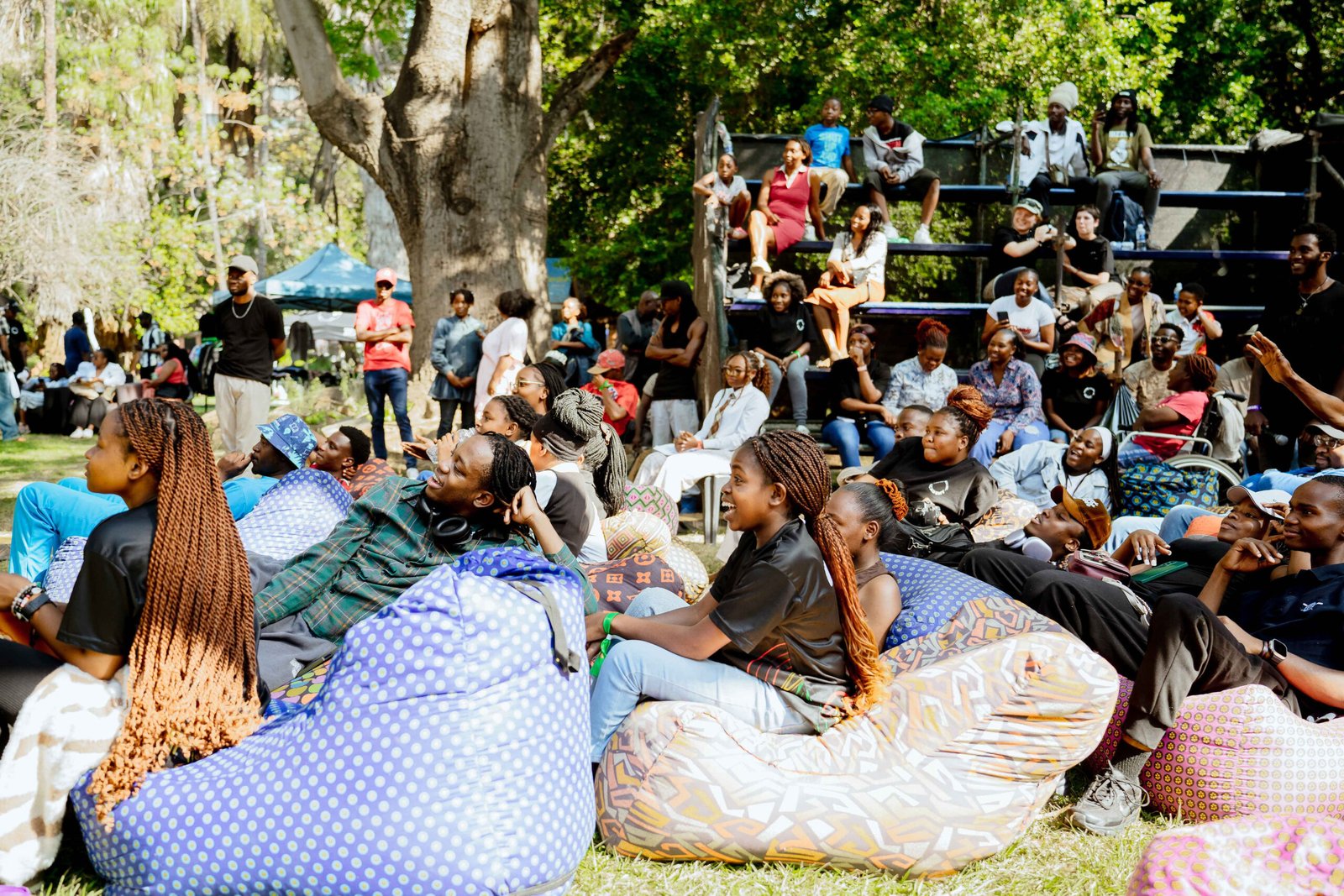
“Who among us here is coming from a place where they have electricity?”
Harare gardens was full of young people, but only three hands went up.
The question was simple, but the answer exposed the scale of Africa’s energy crisis.
Africa is talking about smart cities, renewable energy and a green transition, yet millions of people are still waiting for something more basic, reliable electricity.
And if energy insecurity is already being felt in cities, the burden is even heavier in rural and marginalised communities.
“The statistics tell you that the issue of energy poverty is a national crisis. It’s a city crisis. It’s a continental crisis,” Passionate Fuza, Centre for Natural Resource Governance (CNRG) representative and one of the panelists, said.
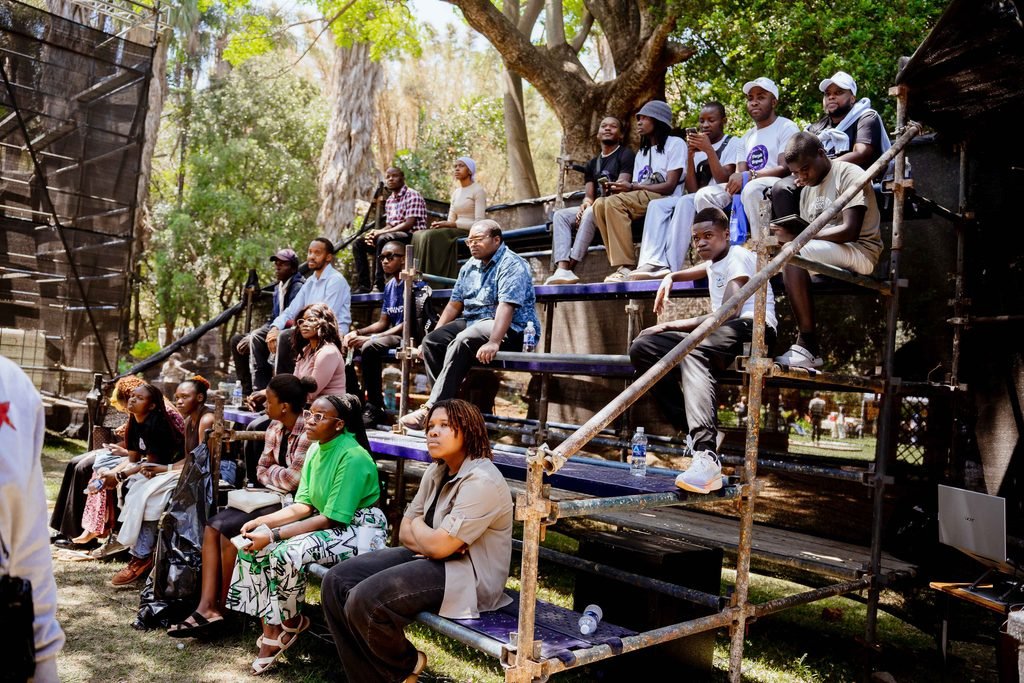
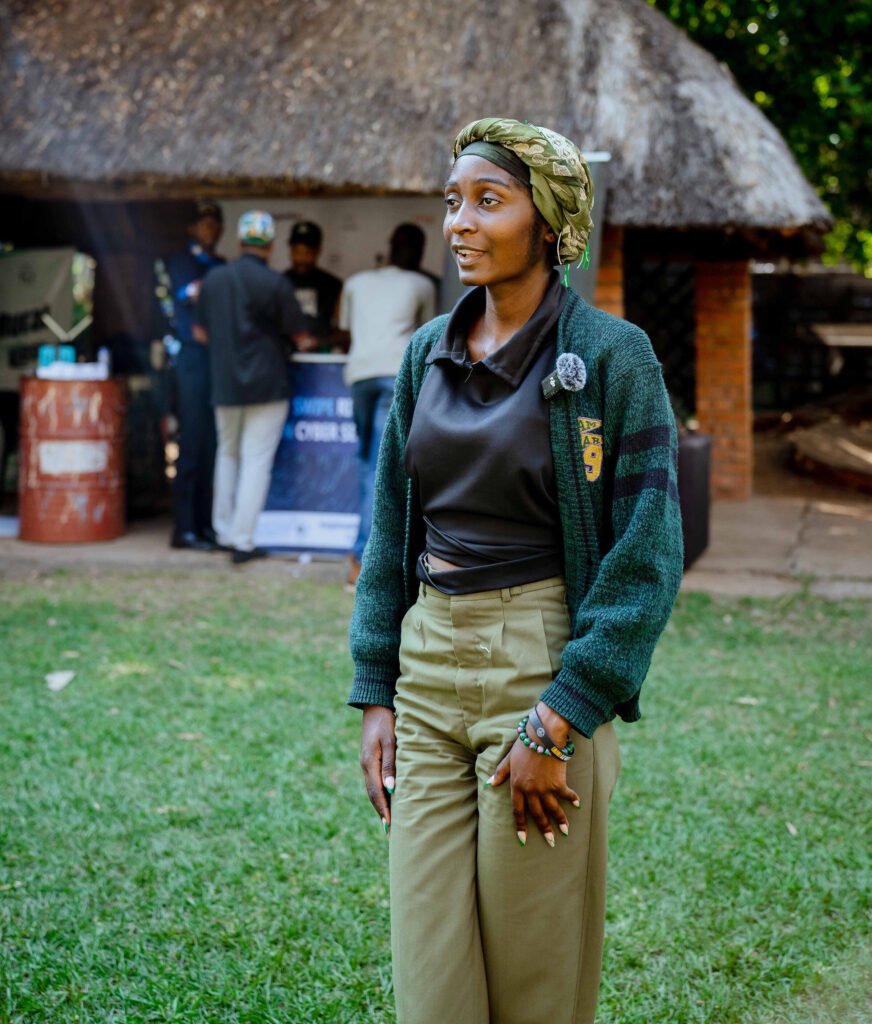
Held as part of Magamba Network’s annual Shoko Festival 2026 under the theme “Rooted, Reimagined, Regenerated,” the Green Cities Expo brought together young people, climate activists, artists, community organisers and innovators to debate what an African transition should actually look like.

The conversations went beyond simply replacing coal, oil and gas with solar panels and wind turbines. They focused on who owns energy, who makes decisions about it and whether communities themselves will benefit from the transition.
Fuza said Africa must define energy sovereignty according to the realities of its own communities rather than importing models designed elsewhere.
“Energy sovereignty, we should define it in our own terms, according to our own livelihood,” Fuza said.
Fired Up coordinator Liam Kanhenga believes that Africa’s dependence on fossil fuels has left countries vulnerable to forces they cannot control, from global conflict to sudden increases in fuel prices.
The fossil-fuel dependency is not merely an environmental problem but part of an economic system in which communities carry the costs while others extract the profits.
He described the continent’s current energy system as one shaped by dependence, misleading narratives and extractive economics.
“Africa’s energy story is that of a society trapped in fossil fuel dependency, shaped by compromised discourse, fossil propaganda and profit extractive capitalism,” Kanhenga said.
Recent fuel shocks have demonstrated how quickly dependence on fossil fuels can reach ordinary households. When fuel prices increase, transport costs rise, food becomes more expensive and families already struggling with the cost of living are forced to absorb another shock.
Kanhenga said these pressures strengthen the case for African countries to move towards locally available renewable resources.
“This saw a sharp increase in fuel prices showing exactly why fossil fuels are bad for not just the environment but also people and the planet,” he said.
Yet changing the source of energy does not automatically make a transition just. The burden of moving to cleaner energy cannot simply be transferred to ordinary households while governments and private companies retain control of the process.
Affordable alternatives, supportive policies and meaningful community participation have to sit at the centre of the shift.
He described a fair transition as one designed around people rather than technology alone.
“A just transition that is people centred is that which leaves no one behind through introducing affordable alternatives that rely on readily available resources that are clean,” he said.
The question of ownership became even sharper during a panel titled “Green Revolution or Land Grab 2.0?”, which examined whether Africa’s transition could reproduce the same patterns of extraction that characterised the fossil-fuel economy.
GroundWork South Africa, Thandeka Thusini said communities cannot speak meaningfully about energy sovereignty when they have little ownership or control over the systems that generate energy.
African communities have often lived alongside mines, power stations and energy resources while remaining poor and under-served themselves. This contradiction begins with a basic absence of ownership.
“When you speak about energy sovereignty, energy has never been ours, by the way, because you don’t have ownership of it, we don’t have control,” she said.
Her alternative begins at community level. Thusini described informal settlements where residents have developed solar solutions to heat water, charge phones and meet basic household needs. Rather than waiting indefinitely for large systems to reach them, communities are beginning to create responses shaped by their own realities.
She said such initiatives demonstrate that people should be seen as participants in solving the energy crisis rather than simply consumers waiting for governments to deliver electricity.
“We propose our own solutions so that we can better offload the current load that the government is currently having in terms of providing access to energy to every household in our communities,” she said.
That idea also changes what participation means. Communities attending consultations after major decisions have already been made cannot be described as having genuine control.
Thusini believes that democracy should include the ability of people to shape, manage and influence processes that directly affect their lives.
“Democracy isn’t about voting. Democracy is about being included.”
Inclusion, in her view, must mean more than presence. It must involve decision-making, ownership and the capacity to maintain local systems.
“Energy sovereignty is about access. It’s about controlling. It’s about having ownership, being able to maintain,” she added.
The discussion also exposed how differently energy poverty is experienced by women and girls. In many households, lack of reliable electricity means waking early to heat water, cooking over smoky fires and spending hours collecting fuel.
Girls may return from school only to walk long distances in search of firewood, turning energy poverty into a burden measured not only in electricity shortages but also in lost time, education and opportunity.
SHINE Collab, Knowledge and Learning Officer for the Mikhail Aruberito, said these experiences should no longer sit on the margins of energy debates.
“In the case of gender, we need to amplify the struggle of women that are in the community, how they are dealing with issues of access to energy and also energy sovereignty,” he said.
Aruberito pointed to the ordinary routines that reveal how deeply energy poverty shapes women’s lives, mothers waking early to heat water for children, girls collecting firewood after school and families depending on physically demanding forms of agriculture.
These experiences turn the idea of a just transition into something much more practical. The success of clean energy cannot be judged only by megawatts installed or investments announced. It should also be judged by whether women spend fewer hours searching for fuel, whether girls gain more time for school and whether families are able to live healthier, safer lives.
Beyond the policy discussions, the expo showed how young people are already trying to build some of those alternatives themselves. Greening the Ghetto team leader,Tafadzwa Gwini, winner of the Youth Innovation Showcase, presented a portable urban gardening concept aimed at people with limited space.
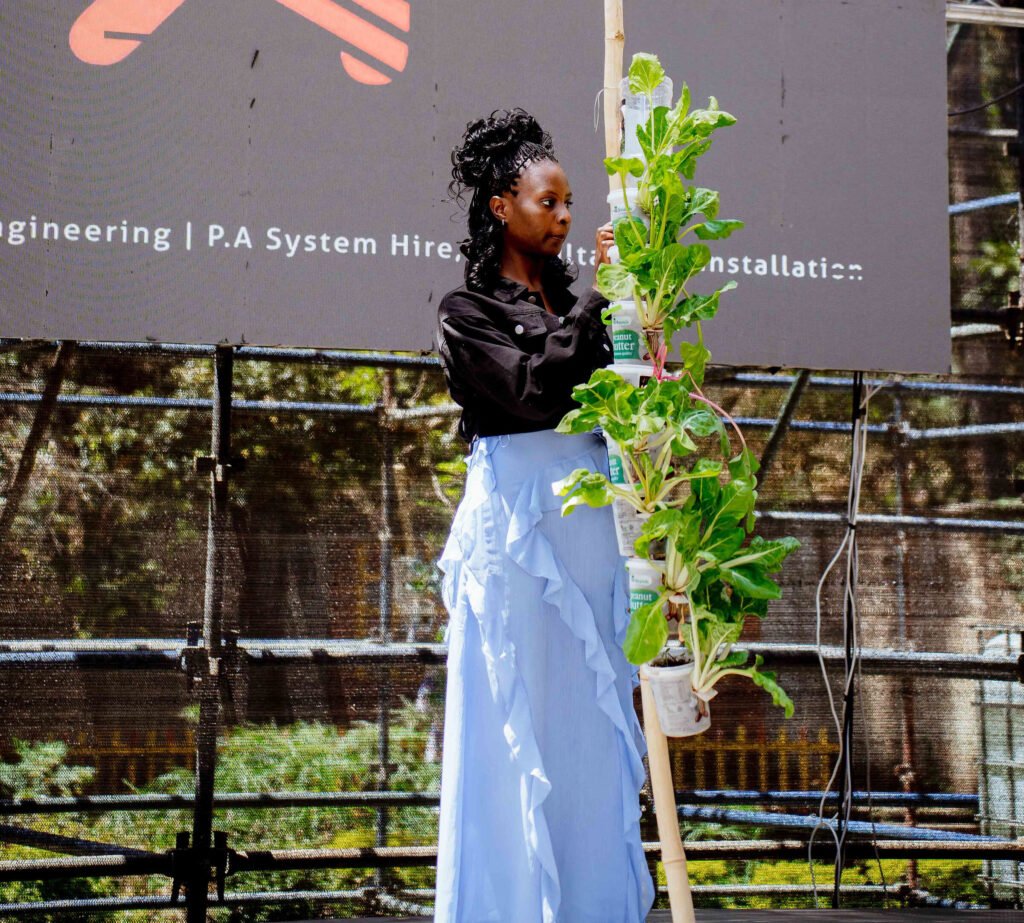
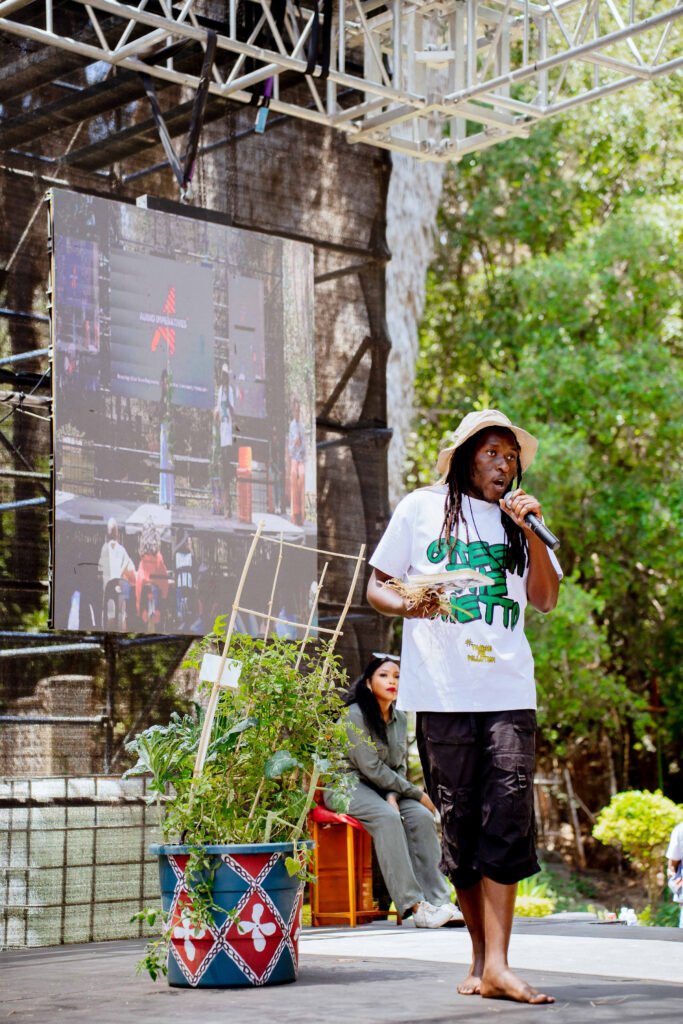
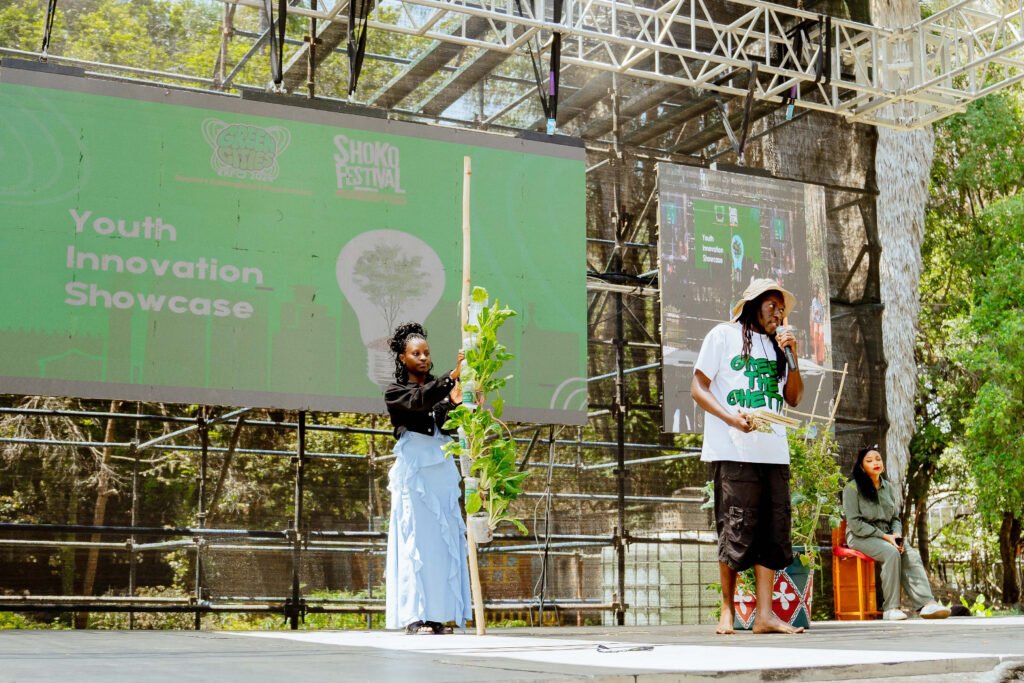
Recycled buckets, plastic bottles and other readily available materials become growing spaces, while permaculture principles help reduce the amount of land, soil and water required.
In a country where climate shocks are worsening food insecurity, Gwini said that some of the most useful innovations are often the simplest and most accessible.
“Sometimes the most life-saving, people-oriented innovations are not capital intensive and scientific laboratory innovations, but harnessing the laws of nature and recycling used waste to feed those without access to sufficient food,” he said.
His idea also challenges the belief that innovation must begin inside an expensive laboratory or depend on sophisticated technology. Young people can start with what already exists around them, combining local knowledge with experimentation. That approach could encourage more young people to see themselves as problem-solvers rather than waiting for solutions to arrive from somewhere else.
“If young people realise that sometimes you don’t need a sophisticated laboratory to innovate, it will inspire more young people to experiment with what is around them and the knowledge that they possess.”
Climate innovation becomes meaningful when ordinary people can actually afford and use it.
“Innovations to combat the impact of the climate crisis need to be within the reach of ordinary people. That is true, just transition,” he added.
Other young innovators brought the same community-first thinking to water and wetlands.
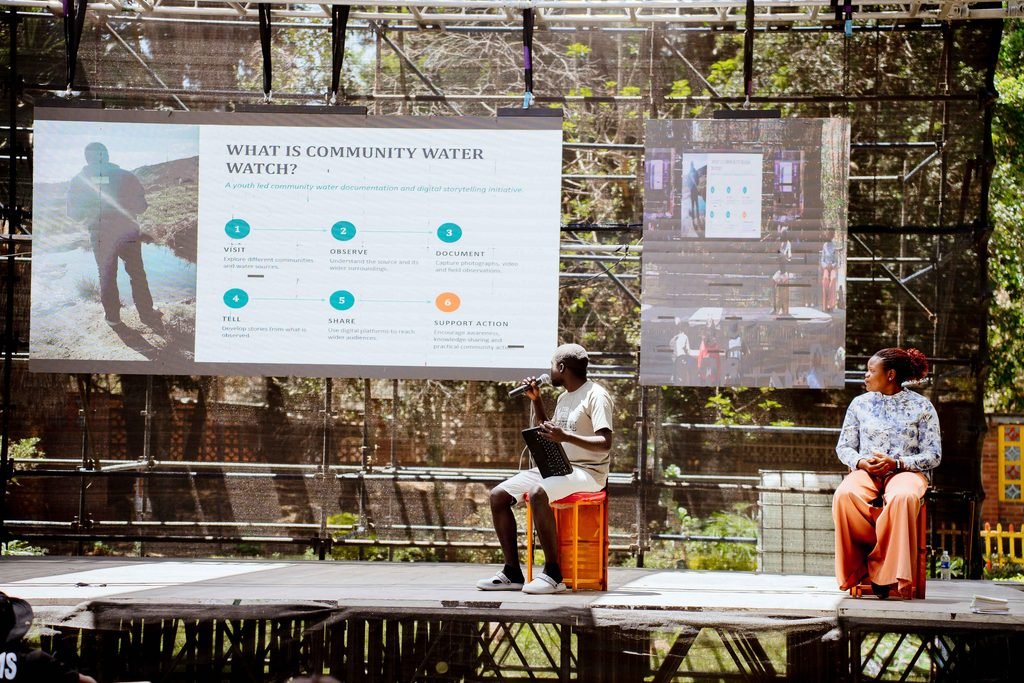
Thulani Moyo’s Community Water Watch concept takes young people into their own neighbourhoods to observe and document conditions around water sources before transforming those observations into digital stories.The idea recognises that a water source tells more than an environmental story, it can reveal questions of access, pollution, neglect, climate change, inequality and resilience.
Keith Tafangombe’s Dambo Watch, meanwhile, proposed an offline-first application and USSD system that would allow residents to report wetland encroachment, dumping and unauthorised construction. Connecting those community reports with environmental authorities, the City of Harare and conservation organisations would turn residents into part of the early-warning system rather than leaving environmental monitoring entirely to institutions.
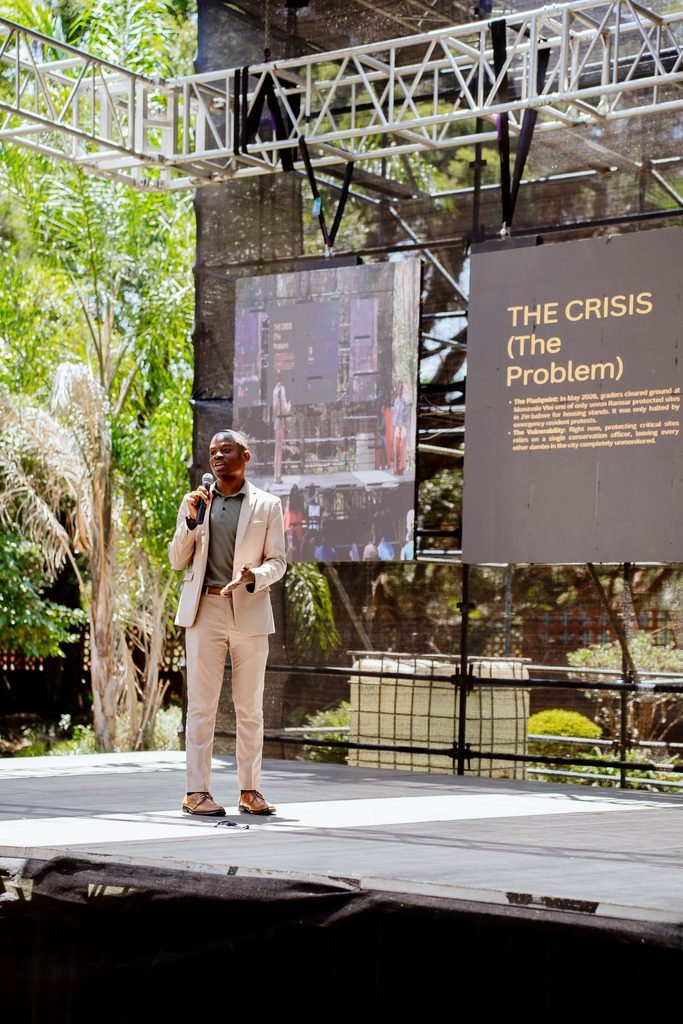
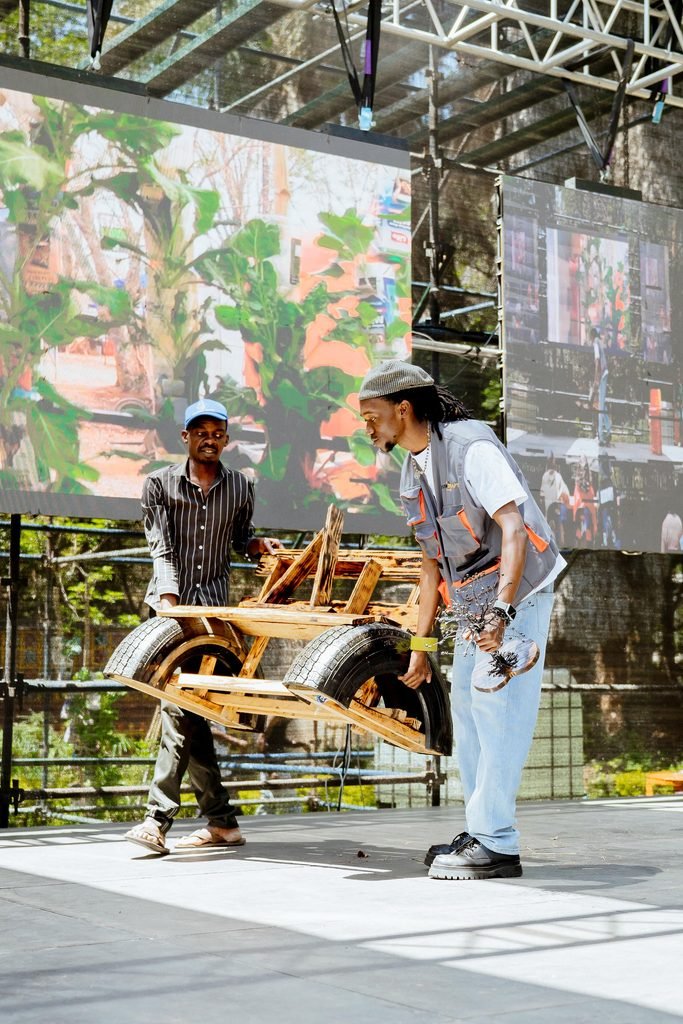
The wider Green Cities Expo also pushed the definition of a sustainable city beyond power stations, buildings and policy documents. Skateboarding became a conversation about mobility and reducing dependence on carbon-heavy transport.
Young people were invited to imagine urban spaces where they can move, create, play and connect. Cosplayers arrived in costumes made partly from discarded materials, turning waste into art and using familiar pop-culture spaces to spark conversations about recycling and upcycling.

Art also became part of the climate conversation at the Green Cities Expo through The Future Needs Our Stories, a three-day immersive installation under the Climate X Indigenous Voices. Designed as a walk-through tunnel, the experience took visitors through stories of land, memory, displacement, resistance and hope, using projections, oral histories, photography, poetry and interactive displays.
The installation added another layer to the expo’s message, that the transition to greener cities is not only about technology and infrastructure, but also about whose knowledge is valued, whose stories are remembered and who gets to shape the future.
Climate quizzes, cooking demonstrations and creative performances reinforced the idea that environmental action cannot remain confined to conference rooms. It has to become part of culture and everyday life.
That connection between culture and climate action was particularly visible during the Climate Memorial Poetry Slam. This year’s winner, Phathisankosi Moyo, known as Starlight, uses creative expression to translate complex climate information into stories that communities, particularly young people, can understand.
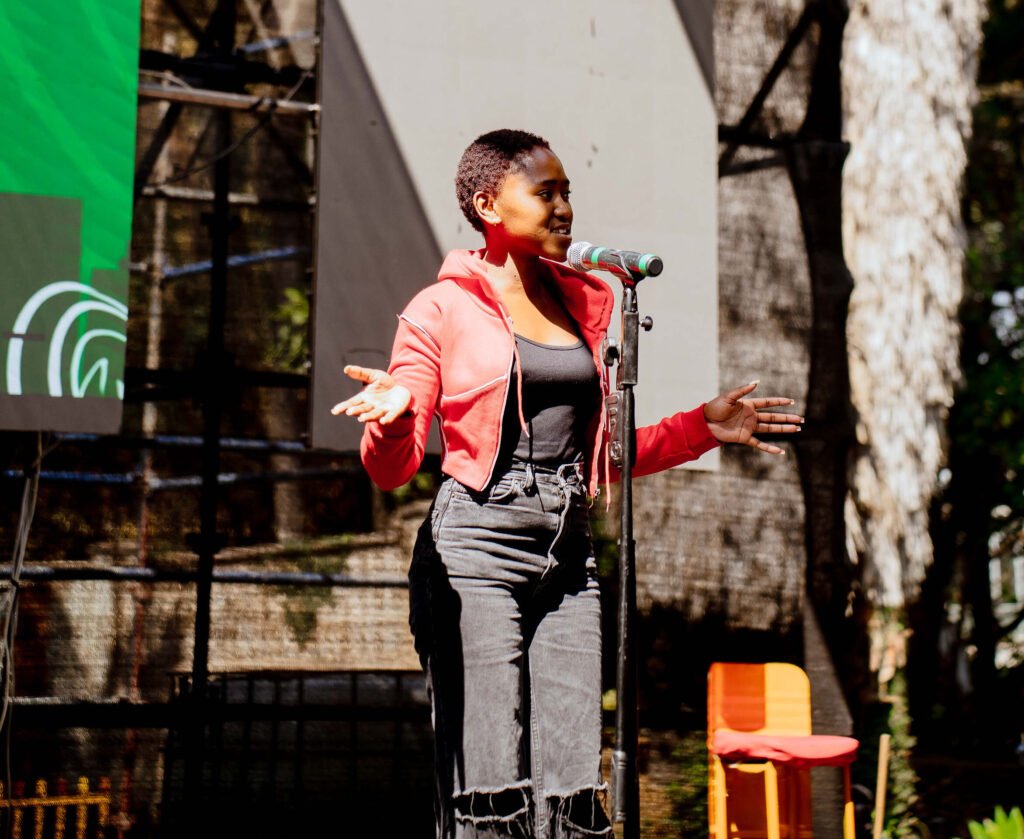
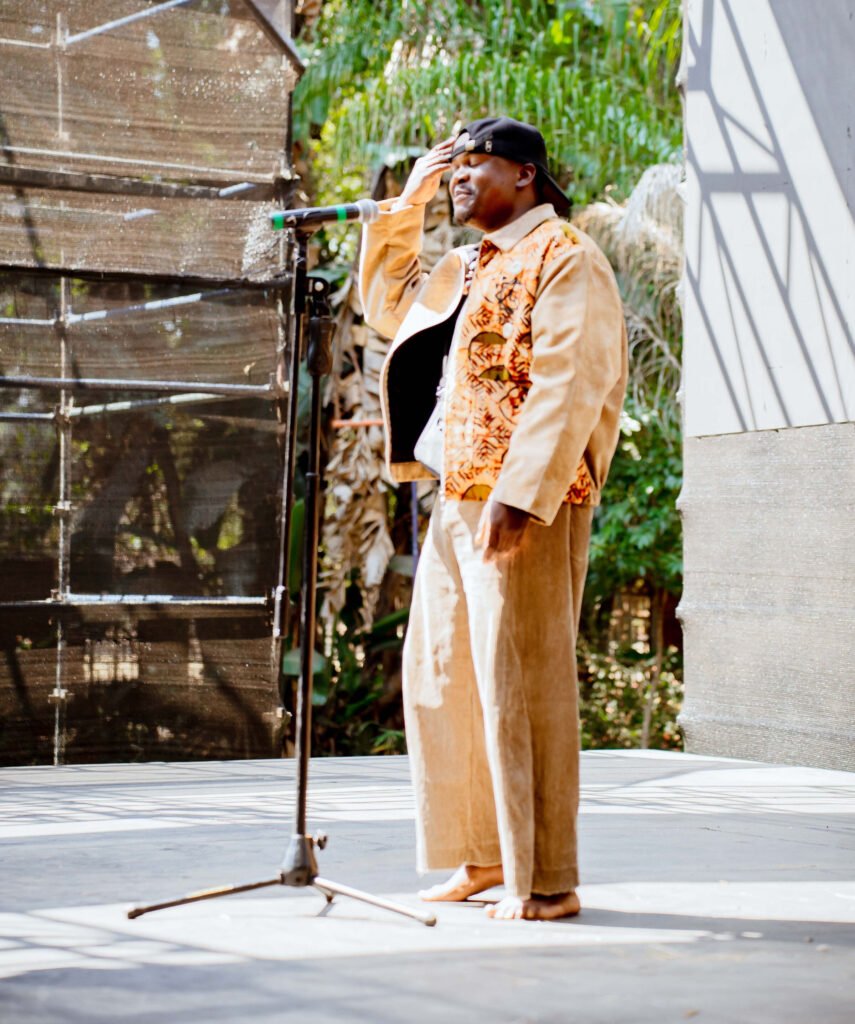
She said winning the competition reflected work she had already begun rather than being an isolated performance.
“It wasn’t just about winning, it was a reflection of my work, what I’m currently doing towards advancing climate action through creative expression,” she said.
Her work also raises a challenge to the language commonly used in climate spaces. Terms such as “just transition” can dominate policy documents and conferences while meaning very little to the people whose lives are supposed to change.
Starlight said that communities must understand and participate in the transition before institutions begin making decisions on their behalf.
“Just transition should be at the center of the people. Before we even take it up in big offices and throw around big words we should first know if the people at the center of it all even know what that is,” she said.
This year’s Green Cities Expo offered different versions of the same message. A discarded bottle could become part of an urban garden. A mobile phone could become a tool for protecting a wetland. A poem could translate climate science. A skateboard could start a conversation about mobility. A solar panel could give a community not only electricity, but greater control over how that electricity is produced and used.
Yet the strongest image remained the one that opened the gathering: more than 200 young people being asked whether they came from homes with electricity, and only three hands rising.
That image captures the distance Africa still has to travel between promises of a green future and the realities of the present. The continent’s transition cannot be judged only by renewable-energy projects, climate-finance announcements or ambitious policy targets. Its success will be measured inside homes, informal settlements and rural communities by whether families can afford electricity, women and girls regain hours of their lives, young people can build solutions and communities gain a genuine stake in the systems around them.
Thusini ultimately reduced the debate to the values that should determine what happens next. A genuine transition must protect dignity and put human beings before technology or profit.
“We need a just transition that will be about justice, that will be about dignity, that will be about humanity, and that is energy sovereignty for us,” she said.
Africa does not only need cleaner energy. It needs energy that is affordable, accessible and shaped by the people who use it.
The transition is not simply about changing where power comes from.
It is about changing who holds it.


